


 If you are sexually active or have been thinking about becoming sexually active, it’s good to know that different activities have different risks for sexually transmitted and blood-borne infections (STBBIs), including HIV. Sharing needles and other kinds of drug equipment also has risks. At Nine Circles, we don’t judge your choices. We operate from a harm reduction approach, empowering you to make informed choices based on accurate information and a range of options. Here are some common questions we hear:
What is Sex?
Any kind of intimacy can be considered sexual activity. Whether it’s oral sex (receiving or giving), vaginal sex, anal sex (top/bottom), BDSM (bondage, discipline, dominance and submission), needle play, or any other form of skin to skin contact, it counts as sex!
What are sexually transmitted and blood-borne infections (STBBIs)?
- A sexually transmitted infection (STI) is an infection which is passed from one person to another through sexual contact, e.g. vaginal, oral or anal sex.
- A blood borne infection (BBI) is an infection which is passed from one person to another through blood to blood contact. Some blood borne infections such as HIV and Hepatitis B may also be transmitted through sexual contact.
How often should I be tested?
You should be tested on a regular basis, as it’s quite common to show no symptoms for many STBBIs. This helps avoid future complications from untreated infections. We think it’s best for all adults to be tested for HIV every 5 years. Some people may come in more frequently for STBBI testing if they have had recent encounters they are concerned about, have suggestive symptoms, share drug use equipment or are having unprotected sex with multiple partners.
How can STBBIs be transmitted?
Depending on the type of STBBI, you can get an infection from:
- Skin to skin contact
- Exposure to sex fluids, blood or open sores
What are the transmission risks for HIV?
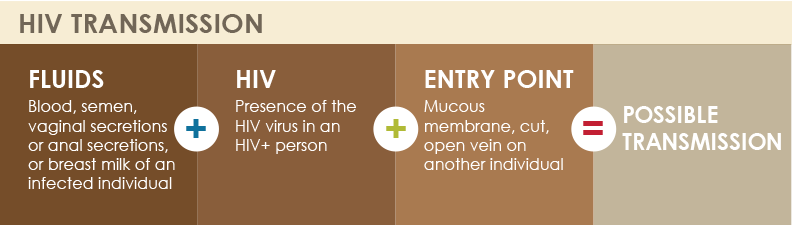
Just because you are exposed to blood or sex fluid from an HIV positive partner DOES NOT mean that you will acquire HIV. As with other STBBIs, not every exposure results in HIV transmission. Many factors influence the possibility of infection after an exposure.
The HIV Transmission Equation:
Have more questions about STBBIs?
Our companion site Sex Friendly Manitoba may have the answers you’re looking for! You can scroll through posts about safer sex, transmission, testing, harm reduction, etc. to find what you are looking for. You can also browse popular keywords or if you don’t see your question, submit one for our Health Educators to answer.
To learn more about the basics of STBBIs, as well as information on prevention and treatment, visit CATIE